Bookish Matters

The person, be it gentleman or lady, who has not pleasure in a good novel, must be intolerably stupid.

—Jane Austen, Northanger Abbey

Sunday, January 29, 2012

The Fault in Our Stars—Review


The Fault in Our Stars is John Green's fourth solo novel. It's the story of  sixteen-year-old Hazel who has been living with cancer since she was twelve. But don't think this is one of the usual bittersweet inspiring cancer stories. Hazel knows all the cliches about the "heroic fight" with cancer. She's smart, irreverent, acerbic, and funny. She only goes to the cancer support group where she is encouraged to "live her best life today!" in order to please her mother. But it's at support group that the story begins, because that's where Hazel meets Augustus Waters.


Through the course of TFIOS, Hazel and Augustus pursue a favorite author to Amsterdam, watch a friend lose his eyes to cancer, utilize Venn diagram humor, and learn what it means to form relationships when cancer makes you a walking grenade.


TFIOS isn't as laugh-out-loud funny as Green's previous novels, but it still has that mix of pop culture and high brow allusions, humor and elegance that we have come to love in John Green's work. Green exceeds at creating entertainment studded with poignant observations of what it means to be human.


Quote-pictures courtesy of http://penguinbtl.blogspot.com/

Saturday, January 28, 2012

Porn for Bibliophiles


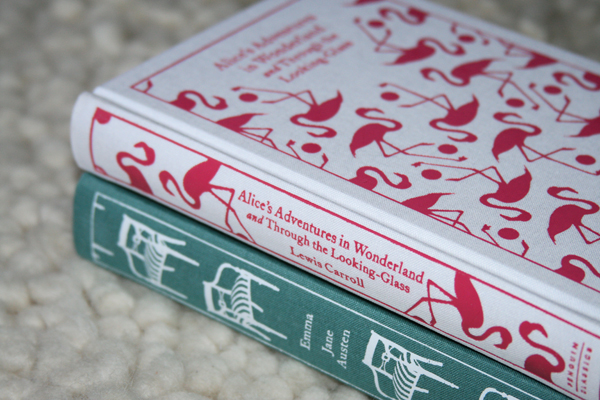
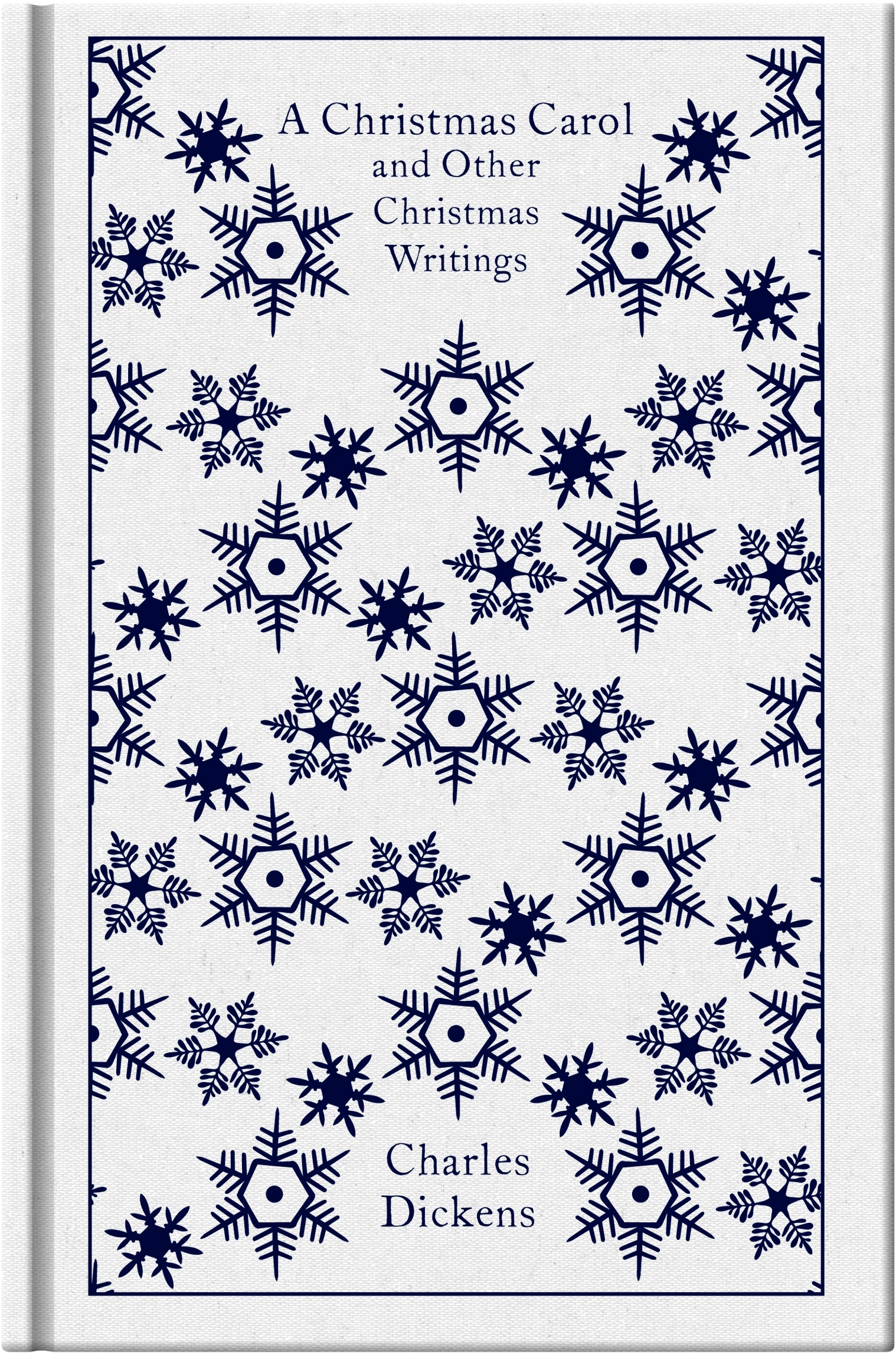
Have you guys seen the recent Penguin Classics? They're gorgeous. Some, like the Jane Austen and Charles Dickens, make me wish I didn't already own copies so I can purchase these additions.


Some, like Anne of Green Gables, I think look great but don't fit the story inside.


Some, like Peter Pan, I would be thrilled if people would buy me for birthdays or Christmas. Hint hint.


Thursday, January 26, 2012

so much depends

so much depends
upon

the shadow of
branches

sun against the
window

on a winter
afternoon.


ed

The ADD Narrator


I've started The Forgotten Garden by Kate Morton. I'm 66 pages in and the book has yet to settle on a single timeline or protagonist. Each chapter (and the chapters aren't particularly long) is from a new point of view, in a different year, and sometimes in a different city. They all follow the narrative of an abandoned child, but it skips around a lot.

We've all read these books, or heard someone say, "It was hard to get into because it kept jumping around and it took a long time to get attached to a character, but once I got into it it was great."

But I'm annoyed. It's like the narrator can't make up her mind about who to follow or which era she wants to be in. It's like the narrator has ADD. Is it 1913? 1930? 1975? 2005? Is it from the point of view of Nell, Cassandra, Hugh?

I understand that there is a mystery with this abandoned child, and skipping around gives us a broad picture of the situation while also giving us tiny clues about the mystery. But it feels like the narrator is dangling the mystery in front of my face, singing, "Nahnah nahnah nahhh nahhh. You can't get it." Or that the author doesn't trust herself to hook the reader from the beginning, and so each chapter she has to try to hook us again.

I understand there is a mystery and that I won't get all the details until the end. Now let's move on with the story.

You can probably tell I'm aggravated. But this isn't all to say the book is bad. I'm still reading it, after all. I'm just wondering...what does a story gain by jumping around, character to character and setting to setting? What are the pros of this story-telling device? What would lead an author to make this choice?

Thoughts, oh dear readers?

Monday, January 23, 2012

Prague

My father was called away before he had finished his sentence, and he left my mind resting on the word Prague, with a strange sense that a new and wondrous scene was breaking upon me: a city under the broad sunshine, that seemed to me as if it were the summer sunshine of a long-past century arrested in its course—unrefreshed for ages by dews of night, or the rushing rain-cloud; scorching the dusty, weary, time-eaten grandeur of a people doomed to live on in the stale repetition of memories, like deposed and superannuated kings in their regal gold-inwoven tatters. The city looked so thirsty that the broad river seemed to me a sheet of metal; and the blackened statues, as I passed under their blank gaze, along the unending bridge, with their ancient garments and their saintly crowns, seemed to me the real inhabitants and owners of this place, while the busy, trivial men and women, hurrying to and fro, were a swarm of ephemeral visitants infesting it for a day. It is such grim, stony beings as these, I thought, who are the fathers of ancient faded children, in those tanned time-fretted dwellings that crowd the steep before me; who pay their court in the worn and crumbling pomp of the palace which stretches its monotonous length on the height; who worship wearily in the stifling air of the churches, urged by no fear or hope, but compelled by their doom to be ever old and undying, to live on in the rigidity of habit, as they live on in perpetual midday, without the repose of night or the new birth of morning.


—from "The Lifted Veil" by George Eliot

Sunday, January 22, 2012

Sherlock Holmes


Sherlock Holmes is very much in the public eye these days. As I'm sure you know, there's the wonderful second season of BBC's Sherlock, and there's the sequel to the Robert Downey Jr movie (which I have yet to see, my little local theater plays movies months later than everyone else). I can't find my copy of the original stories, much to my unhappiness. They were housed on the floor beside my bed for over a year. Wait, wait...there it is! Hiding amongst the DFW on the Newly Acquired shelf!